Supply Shock: A Rigorous Framework for Stress-Testing Token Inflation Before You Commit Capital
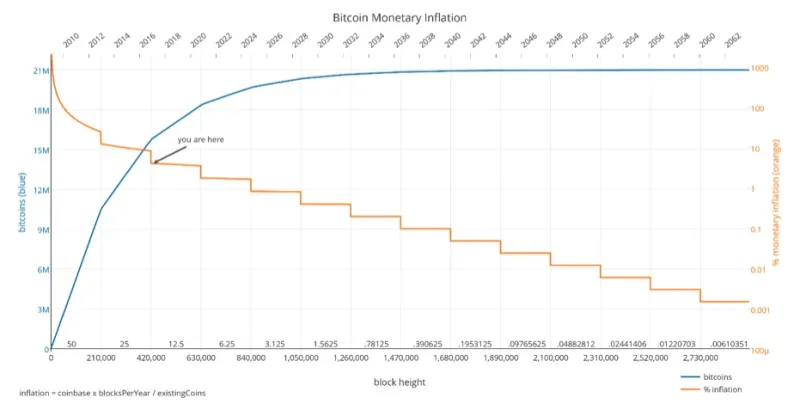
Photo: cryptocurrency tokenomics chart inflation supply schedule analysis whiteboard, via empirica.io
There is a category of investment loss that is particularly difficult to detect in real time: the loss that arrives not through a price collapse but through the quiet, scheduled dilution of your ownership stake. In traditional equity markets, investors are trained to monitor share issuance, dilution from convertible instruments, and stock-based compensation that erodes per-share value. In token markets, the equivalent dynamic is supply inflation — and it operates through mechanisms that are frequently more aggressive, less transparent, and more consequential than their equity-market analogs.
For accredited investors allocating at scale, understanding tokenomics is not a supplementary analytical exercise. It is a prerequisite for responsible capital deployment.
Why Tokenomics Deserves More Rigor Than It Typically Receives
The term "tokenomics" has become so broadly applied that it risks losing analytical precision. In practice, it encompasses several distinct variables that must be evaluated independently and in combination: total supply, circulating supply, emission schedule, vesting structures for team and investor allocations, and the governance mechanisms that determine whether any of these parameters can be altered post-launch.
The most common analytical failure among sophisticated investors new to digital assets is conflating market capitalization — which references circulating supply — with fully diluted valuation, which references total supply. A token trading at a market cap of $200 million with a fully diluted valuation of $2 billion is not a $200 million asset. It is a $2 billion asset that has delivered 10 percent of its total supply to the market. The remaining 90 percent will arrive on a schedule that is frequently buried in technical documentation, white papers, or smart contract code — deliberately obscured from the casual reader.
The Red Flag Taxonomy
Through rigorous analysis of tokenomics structures across hundreds of projects, several categories of red flags have emerged as reliable predictors of long-term value destruction.
Cliff-heavy vesting schedules represent the most common structural hazard. A cliff vesting arrangement grants a substantial block of tokens to team members, early investors, or advisors on a specific future date, followed by a linear release period. The cliff event creates a predictable, often dramatic supply expansion that, absent equivalent demand growth, mechanically suppresses price. Projects that place cliff events at the 12-month mark — a common choice — are essentially scheduling a dilution event to coincide with the period when early retail enthusiasm is most likely to be fading.
Opaque founder allocation ratios are a second category of concern. Industry norms suggest that combined team and advisor allocations above 20 percent of total supply warrant heightened scrutiny. Allocations above 30 percent are a structural warning sign. Projects that distribute this information across multiple documents — allocating portions to a "foundation," a "development fund," and an "ecosystem reserve" separately — are frequently obscuring the aggregate concentration of insider ownership.
Uncapped emission curves in proof-of-stake or liquidity mining contexts deserve particular attention. A token that offers attractive staking yields today may be funding those yields through inflationary emission that will, over a 24-month horizon, expand total supply by 40 to 80 percent. The yield-adjusted return on a staked position in such a protocol may be substantially negative in real terms even if the nominal staking APY appears compelling.
Governance-modifiable supply parameters introduce a category of risk that is qualitatively different from the above. When a token's emission schedule, maximum supply cap, or vesting acceleration terms can be altered through on-chain governance — particularly governance dominated by insider token holders — the published tokenomics represent a starting point rather than a binding commitment. Investors who treat governance-modifiable parameters as fixed constraints are systematically underestimating their risk exposure.
The Stress-Test Protocol
The following analytical protocol is designed to surface supply-related risks before capital commitment. It can be applied by any accredited investor willing to invest the requisite analytical time — or delegated to a qualified analyst with specific instructions.
Step 1: Reconstruct the full supply schedule. Begin by locating the project's token distribution documentation — ideally the smart contract itself, not the marketing summary. Map every allocation category (team, investors, advisors, ecosystem, treasury, public sale) against its vesting timeline. Sum the monthly token releases across all categories to produce a forward supply curve expressed in absolute token units.
Step 2: Calculate the annualized dilution rate. Divide the projected 12-month token issuance by current circulating supply. A dilution rate below 10 percent annually is manageable. Rates between 10 and 25 percent require equivalent demand growth to sustain price. Rates above 25 percent annually represent a structural headwind that only exceptional protocol growth can overcome.
Step 3: Identify cliff events and their magnitude. Flag every date on which a single allocation category unlocks more than 2 percent of total supply in a single event. These cliff dates are predictable selling pressure events. If you are entering a position, your entry timing should account for the proximity of the nearest cliff event. Entering within 60 days of a major cliff — absent a specific thesis for why selling pressure will be absorbed — is a structural error.
Step 4: Assess insider concentration and alignment. Calculate the combined percentage of total supply held by team, investors, and advisors. Then assess the alignment of their vesting timelines with the project's stated development milestones. Insider allocations that vest before key protocol milestones are achieved reflect a misalignment between incentive structure and investor interest.
Step 5: Evaluate governance risk to supply parameters. Review the governance documentation to determine which supply-related parameters are modifiable by token holder vote, and what quorum and approval thresholds apply. If a small group of insider token holders can collectively reach quorum, the supply schedule is effectively at their discretion.
Applying the Framework: A Practical Illustration
Consider a hypothetical token with the following characteristics: $150 million market cap at launch, 15 percent of total supply in circulation, a 12-month cliff for team allocations representing 18 percent of total supply, and an annual staking emission rate of 12 percent of circulating supply. The fully diluted valuation is $1 billion.
The 12-month dilution picture is severe. Team cliff tokens arriving at month 12 represent a supply expansion of 120 percent of current circulating supply in a single event. Staking emissions over the same period add another 12 percent. Combined, the circulating supply more than doubles within 12 months absent any additional scheduled releases — and this analysis excludes ecosystem reserve distributions, which are frequently at the discretion of the foundation.
An investor entering this position at $150 million market cap and holding for 12 months would need the project's fully diluted valuation to increase by over 100 percent simply to maintain their entry price in nominal terms. That is not an investment thesis. That is a bet on extraordinary demand growth to overcome a structurally dilutive supply schedule.
The Discipline of Pre-Commitment Analysis
The investors who suffer most severely from tokenomics-driven value destruction are those who conduct this analysis after entering a position rather than before. The psychological dynamics of loss aversion and sunk-cost reasoning make it far more difficult to exit a deteriorating position than to decline entry in the first place.
At RacoCoin VIP, the standard we advocate for our members is unambiguous: no position of meaningful size should be initiated without a completed supply-schedule analysis. The information required to conduct this analysis is, in the vast majority of cases, publicly available. The discipline to apply it consistently is the only barrier between a well-constructed portfolio and one that is quietly being diluted into mediocrity on a predetermined schedule.
The token projects that survive and compound over multi-year horizons are almost invariably those with conservative, transparent, and well-aligned tokenomics. Identifying them before they are obvious to the broader market is the work of genuine investment intelligence.