The Signal Beneath the Surface: Building a Proprietary On-Chain Intelligence System
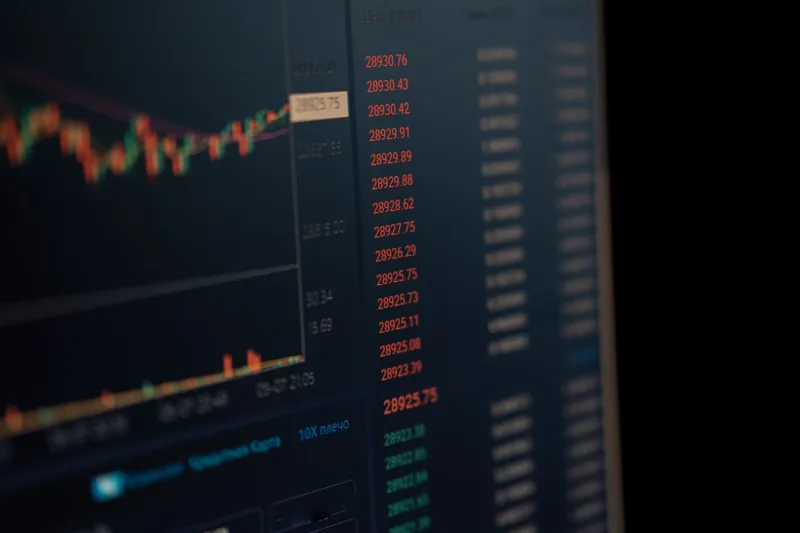
Transparency as Competitive Advantage
Public blockchains are among the most unusual information environments in the history of financial markets. Every transaction, every wallet interaction, every contract call is permanently recorded and universally accessible. In theory, this radical transparency should produce efficient markets where no participant holds an information advantage. In practice, the opposite is true.
The reason is interpretive complexity. The raw data is available to everyone, but the analytical capacity to extract actionable intelligence from that data is distributed extremely unevenly. Investors who have built systematic approaches to on-chain analysis consistently position ahead of market-moving events — not because they possess private information, but because they have developed the interpretive infrastructure to read public information more effectively than their peers.
For high-net-worth investors who have operated in traditional markets where information advantages are closely regulated and difficult to obtain legally, the on-chain environment represents a genuinely unusual opportunity. The edge is not derived from privileged access. It is derived from analytical sophistication applied to data that is available to anyone willing to do the work.
Understanding the Hierarchy of On-Chain Signals
Not all on-chain data carries equal predictive value. Building an effective monitoring system requires understanding which signal categories have demonstrated historical reliability and which generate false positives at rates that undermine actionability.
Tier One: Exchange Flow Analysis
The movement of assets between private wallets and centralized exchange addresses is among the most reliable indicators of near-term market direction. Large inflows to exchange wallets from addresses with long holding histories signal impending sell pressure. Conversely, sustained net outflows from exchanges — where assets move from exchange custody to private wallets — indicate accumulation behavior, as investors remove assets from liquid trading venues and into longer-term storage.
The key refinement here is distinguishing between exchange flows driven by retail participants and those originating from addresses associated with institutional or high-net-worth activity. Wallet age, transaction history, and the size of prior interactions are all relevant filters. An outflow from a wallet that has held assets for three years and transacts in sizes above one hundred thousand dollars carries substantially more signal weight than the same pattern from a recently created wallet.
Tier Two: Whale Accumulation Patterns
Addresses holding significant asset concentrations — typically defined as wallets in the top one percent of holders by asset value for a given token — exhibit behavioral patterns that precede major price movements with notable consistency. The most reliable accumulation signal is not a single large purchase, but a series of methodical, regularly-spaced transactions that incrementally build a position over days or weeks.
This pattern is behaviorally distinct from speculative buying, which tends to concentrate in single large transactions timed to price momentum. The methodical accumulation pattern reflects deliberate position-building by participants who are either confident in a near-term catalyst or willing to accept a longer time horizon for their thesis to develop. Both interpretations are bullish.
Tier Three: Smart Contract Interaction Anomalies
Changes in the pattern of interactions with specific smart contracts — governance contracts, staking mechanisms, liquidity pools, and vesting contracts in particular — often precede protocol-level events that materially affect token valuations. A sudden increase in governance participation from dormant wallets may signal an impending vote on a significant protocol change. Unusual staking inflows ahead of a announced reward period adjustment can indicate that informed participants have accessed information about yield changes before they are widely publicized.
This signal category requires more interpretive work than exchange flows, but it offers a correspondingly longer lead time before market impact materializes.
Building a Monitoring Infrastructure
Constructing a proprietary on-chain intelligence system does not require building technology from scratch. A layered approach using existing tools, combined with systematic analytical protocols, delivers institutional-quality intelligence without the overhead of a dedicated development team.
Data layer. Services such as Dune Analytics, Nansen, and Glassnode provide structured access to on-chain data with varying degrees of analytical pre-processing. Nansen's wallet labeling infrastructure — which tags known exchange addresses, fund wallets, and other institutional actors — is particularly valuable for filtering signal from noise at the exchange flow level.
Alert infrastructure. Custom alert configurations that trigger when specific on-chain conditions are met allow investors to monitor for signal without continuous manual review. Threshold-based alerts for exchange inflows exceeding defined size parameters, wallet concentration changes above specified percentages, and governance contract interaction spikes are all implementable within existing analytics platforms.
Interpretation framework. Raw alerts generate false positives at high rates without an interpretive framework that contextualizes individual signals within broader market conditions. An exchange outflow that would be bullish in a period of sustained on-chain accumulation may be neutral or even bearish in a context where broader market indicators suggest distribution. Developing and continuously refining the contextual rules that govern signal interpretation is the highest-value analytical work in this system.
Cross-Referencing for Signal Confirmation
Individual on-chain signals carry meaningful noise. The most reliable intelligence emerges when multiple signal categories align simultaneously. A protocol where exchange outflows are accelerating, whale wallets are accumulating methodically, and governance participation from dormant addresses is increasing presents a substantially more compelling picture than any single one of those signals in isolation.
Developing a scoring rubric that weights and aggregates signals across categories — and establishing minimum threshold scores before acting on intelligence — imposes discipline that prevents overreaction to individual data points.
The Legal and Ethical Perimeter
A point worth addressing explicitly: on-chain signal analysis, properly conducted, operates entirely within legal boundaries. The data is public, the analysis is proprietary, and the resulting positions reflect the investor's own analytical conclusions rather than any form of material non-public information. This distinguishes on-chain intelligence from the insider trading frameworks that govern traditional securities markets.
However, investors who also maintain relationships with protocol teams, venture investors, or other parties with access to non-public information should maintain clear separation between that information and their on-chain analytical process. Conflating the two creates legal exposure that the on-chain approach, standing alone, does not.
Sustaining the Edge
On-chain analytics is not a static discipline. As more institutional capital develops analytical capabilities in this space, the lead time between signal emergence and market impact will compress. The investors who sustain an information advantage will be those who continuously refine their interpretive frameworks, develop proprietary signal categories that are not yet widely monitored, and maintain the analytical discipline to act on intelligence before consensus forms.
The blockchain's transparency is permanent. The advantage it offers belongs to those who invest in the capacity to read it.