Manufactured Rarity, Real Losses: How Artificial Token Scarcity Quietly Cannibalizes Elite Investor Returns

The pitch is almost always elegant. A token project arrives with a fixed supply ceiling, a tiered access structure reserved for accredited participants, and a whitepaper that frames scarcity as a feature rather than a constraint. For investors accustomed to operating at the upper end of capital markets, the language feels familiar—reminiscent of private equity vintages, restricted membership clubs, or limited-edition alternative assets that genuinely appreciate through constrained availability.
The problem is that cryptocurrency scarcity, unlike physical scarcity, is almost entirely programmable. And programmable scarcity can be reprogrammed.
The Illusion Encoded Into the Contract
Synthetic scarcity in token mechanics typically manifests in one of three structural forms: hard-cap supply limits paired with broad governance authority, deflationary burn mechanisms that obscure inflationary secondary issuances, and tiered vesting schedules that appear to protect early holders while quietly accelerating dilution through protocol-level treasury allocations.
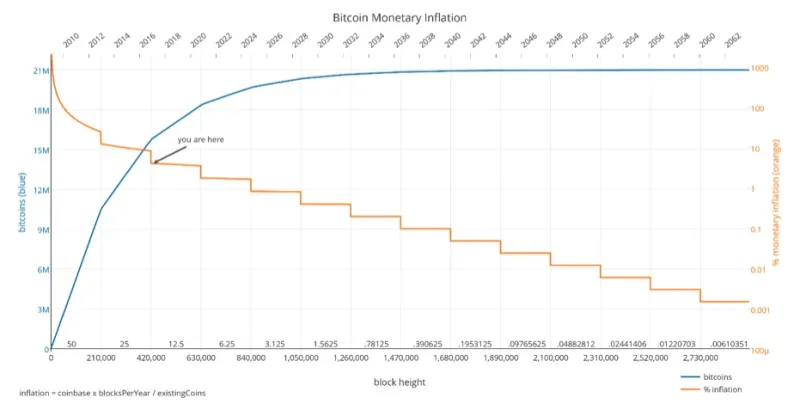
Each of these mechanisms carries a surface credibility that appeals to sophisticated investors. Hard caps, in particular, carry the rhetorical weight of Bitcoin's 21 million ceiling—a comparison that project teams rarely discourage. Yet the critical distinction between Bitcoin's supply constraint and a typical VIP token's supply constraint lies in governance. Bitcoin's issuance schedule is immutable at the protocol level. Most premium token projects retain the capacity to alter supply parameters through governance votes, foundation decisions, or emergency protocol upgrades.
This is not a theoretical vulnerability. It is an operational one.
Case Architecture: How VIP Allocators Get Caught
Consider the structural pattern that recurred across several high-profile token launches between 2021 and 2023. Projects marketed to institutional and accredited investors emphasized fixed total supplies and exclusive allocation tiers. Early VIP participants entered at significant premiums over public sale prices, justified by priority access and governance rights.
Within twelve to eighteen months of launch, a recognizable sequence began to emerge. Treasury wallets—initially presented as ecosystem development reserves—began executing token distributions to validator sets, liquidity incentive programs, and ecosystem grant recipients. These distributions were technically authorized under governance frameworks that the same VIP holders had ratified during onboarding, frequently without fully understanding the scope of discretionary authority being delegated.
The result: effective circulating supply expanded materially while the nominal hard cap remained unchanged on paper. VIP holders who entered at premium valuations found themselves holding positions whose scarcity narrative had been quietly dissolved through legitimate protocol mechanisms they themselves had approved.
The Redemption Trap
A second dilution pathway operates through redemption features embedded in token economics. Several projects targeting elite investors have incorporated buyback-and-burn mechanisms presented as deflationary safeguards. These features are real—but their implementation frequently favors the protocol treasury rather than the holder.
Buybacks typically execute during periods of depressed price, reducing circulating supply at the lowest possible cost to the protocol. Burns reduce nominal token counts. But if the treasury simultaneously issues new tokens through staking rewards, liquidity mining programs, or team compensation structures, the net supply impact is neutral or inflationary even as the deflationary mechanism generates favorable press coverage.
For whale-sized positions, the psychological anchoring to a visible burn mechanism can delay recognition of the underlying dilution. By the time the arithmetic becomes undeniable, exit liquidity for large positions has often deteriorated significantly.
Governance Votes as Dilution Instruments
Perhaps the most sophisticated form of synthetic scarcity destruction operates through governance itself. In decentralized protocols, governance token holders theoretically control supply parameters. In practice, voting participation among retail holders is chronically low, and early institutional allocators frequently hold sufficient governance weight to pass proposals unilaterally—or to be outmaneuvered by coordinated foundation-aligned voting blocs.
Several documented cases exist in which governance proposals to expand ecosystem treasuries, extend vesting schedules for team allocations, or authorize new token issuances for partnership programs passed with minimal opposition, despite materially disadvantaging the VIP holders who had entered at the highest valuations. The structural asymmetry is notable: the parties with the greatest incentive to expand supply often hold governance positions that allow them to do so, while the parties most harmed by dilution—early premium allocators—frequently lack the coordination mechanisms to mount effective opposition.
What Rigorous Due Diligence Actually Requires
The corrective for sophisticated investors is not avoidance of scarcity-driven projects categorically. Genuine supply constraints do exist, and they do create asymmetric upside under specific market conditions. The discipline lies in distinguishing structural scarcity from performative scarcity before capital is committed.
Several analytical checkpoints materially reduce exposure to synthetic scarcity risk. First, examine governance authority over supply parameters with the same rigor applied to contractual covenants in private credit transactions. If a governance vote can alter supply, model the worst-case scenario under realistic voting dynamics. Second, disaggregate nominal supply from effective circulating supply by mapping all treasury, foundation, and ecosystem wallets and applying realistic distribution timelines. Third, evaluate the incentive alignment between team token allocations and holder value—projects where team compensation scales with token issuance rather than token appreciation carry structural dilution pressure that no scarcity narrative can offset.
Finally, apply the same skepticism to token mechanics that any experienced private equity professional would apply to a capitalization table with aggressive option pools. The architecture matters more than the marketing.
The Premium Positioning Paradox
There is a deeper irony embedded in the synthetic scarcity model that elite investors should internalize. The very features that make a project appealing to high-net-worth allocators—exclusivity, tiered access, VIP positioning—create the conditions for their systematic disadvantage. Premium entry prices require premium exits to generate acceptable returns. But the same exclusivity mechanisms that justified the entry premium frequently constrain exit liquidity, creating a structural trap that deepens as the scarcity narrative erodes.
At RacoCoin VIP, the operational thesis is straightforward: genuine edge in digital asset markets comes from analytical precision, not from accepting a project's self-characterization at face value. Manufactured rarity is a marketing construct. Real value accrues to investors who understand the difference before it costs them capital to learn it.